


Background
The Just Transition Knowledge Network (JETNET), an initiative of the Just Transition Research Centre at IIT Kanpur, invites national and international participants to its Annual Conference 2026.
As countries accelerate their transition toward low-carbon development, extractive regions stand at a critical juncture. The growing policy emphasis on mine and power plant closures, repurposing of fossil-fuel-based infrastructures and regional economic restructuring presents both complex challenges and transformative opportunities. For instance, in India, this is underscored by national efforts toward the simultaneous and sustainable closure of coal mines, alongside the need to ensure long-term socio-economic and ecological resilience in affected regions.
At the same time, global climate discourse increasingly recognises that transitions must be just, inclusive, and context-specific, particularly in the Global South where development imperatives, livelihoods, and resource dependencies intersect.
This international conference aims to bring together scholars, practitioners, policymakers, industry, and communities to generate actionable, interdisciplinary knowledge on sustainable transitions in extractive regions. It places a special emphasis on:
- Mine closure and repurposing pathways
- Land, ecological, and earth systems transitions
- Regional development and economic diversification
- Policy-relevant research that can inform national strategies and global climate processes
The conference seeks to bridge research, policy, and practice, fostering dialogue that contributes to ongoing national priorities and informs broader international conversations on just transitions.
Objectives
This year's conference will:
- Build a global research cohort working on extractive transitions, land systems, and just transitions
- Create a platform for high-quality academic and field-based insights on mine closure, repurposing, and regional development
- Facilitate knowledge exchange between researchers, policymakers, and practitioners, particularly in the context of ongoing coal transition efforts
- Contribute to policy-relevant discourse by generating insights that can inform national strategies and global climate dialogues
- Advance interdisciplinary approaches, integrating geoscience, spatial technologies (GIS, remote sensing), and socio-economic research
Call for Abstracts
We invite abstracts (200-350 words) that clearly outline the research question, methodology, and key findings or arguments.
Submissions are open to:
- Scholars and early-career researchers
- Civil society, union, and grassroots representatives
- Policy practitioners, analysts, and consultants
- Entrepreneurs and industry professionals
- Public sector professionals
Contributors may be affiliated with universities, research institutions, government bodies, civil society organisations, international organisations, or public/private sector entities.
Submission Types
- Poster
- Research Paper
- Viewpoint/Perspective
- Review Paper
- Case Studies / Best Practices
Themes
Submissions are invited with sectoral emphasis on energy and power, transportation, mineral-based, heavy, extractive industries and critical minerals, tourism, construction and buildings, textile, manufacturing, waste and circular economy and Agriculture, Forestry and Other Land Use (AFOLU) under the following guiding themes.
(Select the most relevant theme during submission)
- Coal and mineral-based economies
- Mine closure, reclamation, and repurposing
- Critical minerals and future resource transitions
- Industrial transitions (steel, cement, manufacturing, textile, construction, etc.)
- Regional economic restructuring and development pathways
- Land use transitions (AFOLU, industrial, urban, peri-urban and rural)
- Geoscience and subsurface perspectives
- Remote sensing and GIS for transition analysis and planning
- Ecological restoration and post-mining landscapes
- Palaeontology and long-term landscape histories
- Climate change impacts on ecosystems and land systems
- Policy processes, legal and institutional frameworks
- Energy transitions and non-fossil pathways
- Science, technology, and innovation for sustainability
- Economic diversification, jobs, and skilling pathways
- Transition finance and green investment
- Circular economy models and sustainable production systems
- Workforce transitions (formal and informal)
- Communities and dependent populations
- Gender, youth, and social inclusion
- Indigenous and local knowledge systems
- Governance and industry actors (state, civil society, industry, MSMEs, networks, etc.)
- Participation, rehabilitation, resettlement, and conflict resolution
Conference Proceedings
Our effort is to provide participants with an opportunity to contribute to globally visible, peer-reviewed knowledge outputs in the field of just transitions and sustainable development.
Selected papers from the conference will be published in a proceedings volume as part of the Scopus-indexed Springer series Springer Proceedings in Business and Economics, subject to the review process of the organizers and the publisher.
For publishing full papers,
- Articles must be original and not submitted elsewhere
- Articles must be a minimum of 6,000 words, excluding references
- Authors must explicitly declare any use of AI at any stage of manuscript preparation
- At least one of the authors should have a PhD from a reputed institution
- Research scholars can submit by collaborating with their guides
- Industry experts can contribute, too, provided they have at least 15 years of industry experience
Submission Timeline and Link
| Timeline | Date |
|---|---|
| Call for Papers | 6 April 2026 |
| Abstract submission deadline | 31 May 2026 Date extended to 15 June 2026 |
| Acceptance notification | 1 July 2026 |
| Registration deadline for conference presentation | 31 July 2026 |
| Submission of first draft of full paper for review | 31 August 2026 |
| Conference dates | 26-27 October 2026 |
Registration Fee and Conference Grants
Participants are advised to register for the conference only once they have received an acceptance notification for the academic conference.
| Indian participants* | International participants* |
|---|---|
| Student - 3,000 INR | Student - 50 USD |
| Non-student - 6,000 INR | Non-student - 150 USD |
*Registration fee is inclusive of annual JETNET membership
Participants with limited funding opportunities will be provided travel and accommodation grants based on their statement of purpose.
- 5 international travel grants
- 15 domestic travel grants
- 15 accommodation grants
Additionally, 5 best paper awards will be given to participants with outstanding research presentations.
Steps to Register
Please follow the steps below to complete your conference registration:
- Read the payment guidelines on how to use the SBI Collect portal (for Indian bank accounts)* - Payment Guidelines (PDF)
- Make the payment through SBI Collect - SBI Collect Portal
- Note down your SBI Collect Reference Number/Transaction ID and download the payment receipt for future reference.
- After completing the payment, fill out the registration form - Registration Form
*For international payments, please make a direct bank transfer using the bank details provided here , and then continue with Steps 3 and 4 mentioned above.
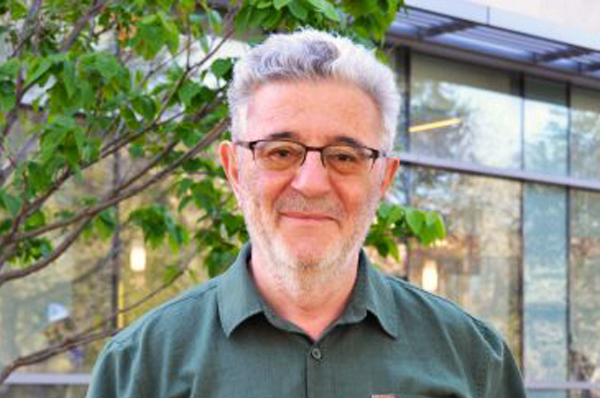
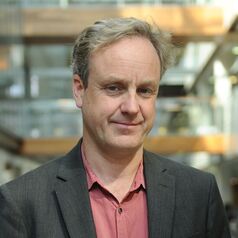
Keynote Speakers for JETNET Conference 2026


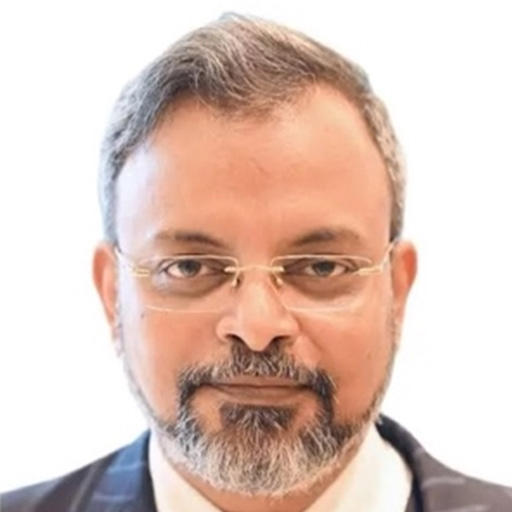
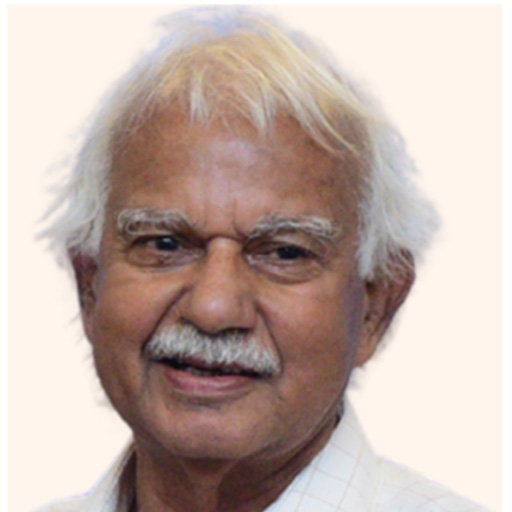
International Advisory Board

Capacity building workshop
A capacity building workshop is being organised for early-career researchers. Participants will have the rare opportunity to have hands-on training by Prof. Benjamin Sovacool on navigating academic paper publishing and peer review processes. Registrations are open to all, irrespective of whether one is shortlisted for the academic conference on 26-27 October 2026.
| Topic | Research design and codes of practice for maximizing the impact of energy and climate social science |
|---|---|
| Date | 28 October 2026 |
| Venue | International Centre Goa, India |
| Mode | In-person |

Resource Person
Prof. Benjamin Sovacool
Abstract - Researchers today need to secure funding, collaborate, share data, publish results, commercialize research, and demonstrate impact. Early career researchers in particular are faced with multiple pressures around these challenges. This presentation will help scholars, especially early career researchers, gain an understanding of how to design their research more effectively, and how to improve their chances to get your work published. Using examples from the energy and climate social sciences field, it will bring attention to the importance of clearly articulating research questions, objectives, and designs. It will provide a framework for conceptualizing novelty. It will suggest codes of practice to improve the quality and rigor of research. It will provide guidelines for improving the style and communication of results. It will lastly discuss what academic and non-academic impact are and propose ways to enhance it. In doing so, the presentation gives first-hand insights into successful research methodologies, what journal editors and reviewers look for, as well as advice on how to successfully promote your work.
Workshop registration
Registration fee
|
Indian participants |
International participants |
|---|---|
| Student - 1,000 INR | Student - 25 USD |
| Non-student - 1,000 INR | Non-student - 25 USD |
Steps to apply
- Read payment guidelines on how to use the SBI portal (for Indian bank accounts) Click here
- Make the payment Click here
- Note down your SBI collect reference number and download the receipt for future reference.
- After payment, please fill Google form
For international payments, please make a bank transfer here.
Contact Us
For queries,
Email us - JTRC IIT Kanpur - jtrc@iitk.ac.in
Drop a WhatsApp message - +91 9519362930